ASES 0 to 1 AI Startup Bootcamp Grand Winner
PocketPatient, pitched for a scalable, defensible niche

Arjhine Ty
June 29, 2025 · 2 min read
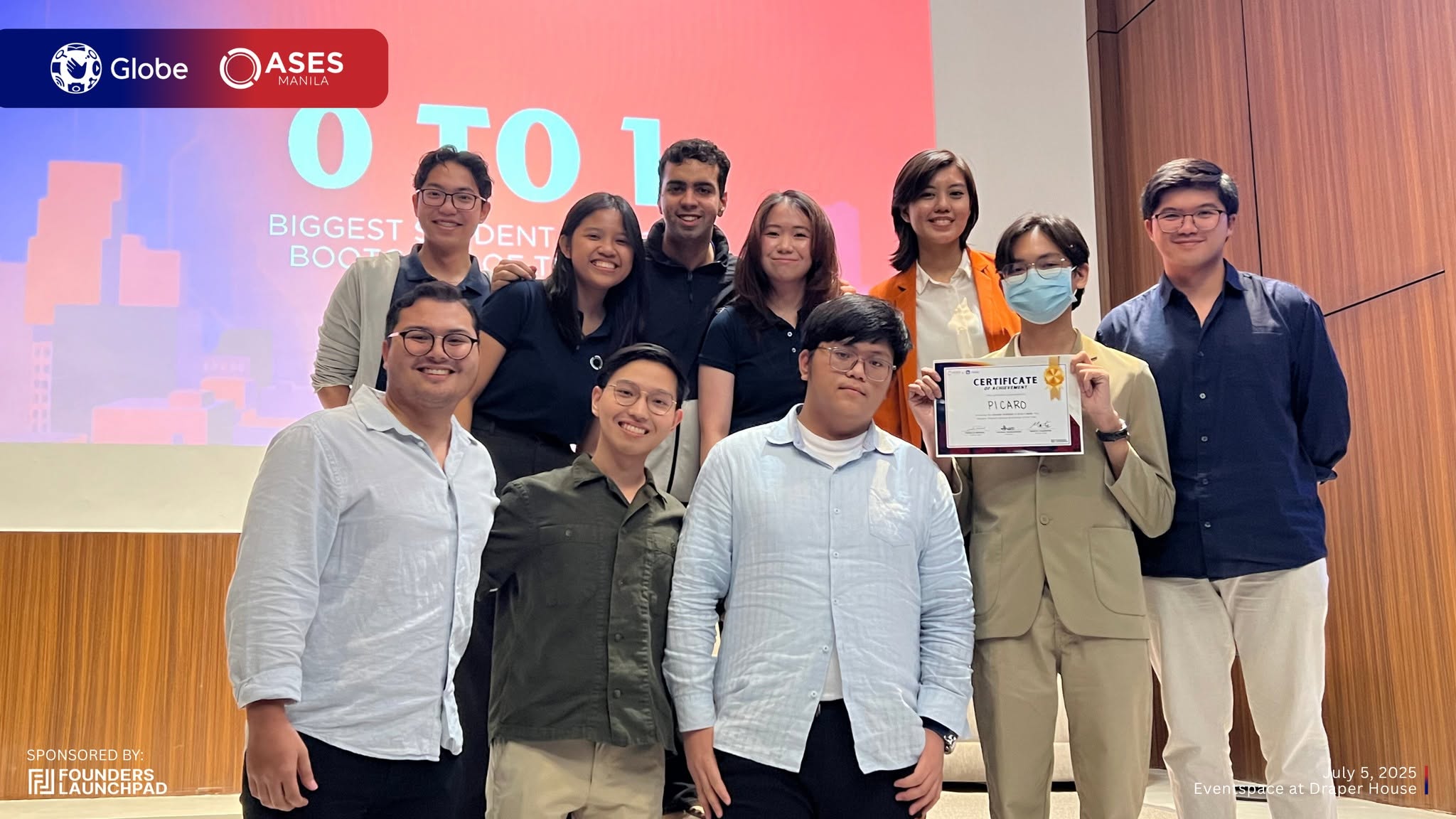
Grand winner of the ASES (Affiliated Stanford Entrepreneurial Students) Manila 0 to 1 AI Startup Bootcamp, pitching PocketPatient — the clinical interview trainer built for med students across every specialty, from ophthalmology to internal medicine, who otherwise get limited practice with real patients.
The problem
Med students need repeated, realistic interview practice before they ever sit across from a real patient, and the standard ways to get it don't scale: live patients are scarce, standardized patients are expensive to hire and schedule, and feedback on clinical reasoning tends to be subjective — one evaluator's "good enough" is another's "needs work," with no consistent rubric behind either.
The solution
PocketPatient gives every learner unlimited interview repetitions with an AI patient that holds character across the full conversation and remembers what was said earlier in the same session, plus structured feedback on exactly where their clinical reasoning went off track — not just whether the final diagnosis was right.
Why the niche, not the market
The pitch deliberately avoided a broad "AI for education" framing. 0 to 1 bootcamps like this one are built around teams proving they understand one specific, defensible wedge — not a total-addressable-market slide — and the case here was that a narrow, underserved niche (clinical interview practice specifically, not medical education generally) is a more credible starting point for scalable impact and profitability than a wide, already-contested one. Backing that framing with market research, rather than just asserting it, was the actual differentiator in the room.
What the pitch had to prove
A 0 to 1 win isn't a product demo — it's an argument that the wedge is real, the timing is right, and the team can actually execute past the first version. The strongest part of this pitch wasn't the interface, it was being able to name the exact constraint (interview repetition volume) that every existing alternative fails to solve at any price point a medical program can actually afford.
What's next
Winning a bootcamp pitch validates the argument, not the product — PocketPatient still has to prove the same claims in front of an actual medical program, not just a room of judges and mentors. That is the harder, longer test, and it is still in progress.
"If you don't want to get hurt, the simplest solution is to never get close to anyone."
— Hikigaya Hachiman