Research & work
Post-training studies, and the systems around them.
Studies first: each one names its baseline, its setup, and what did not work. The systems tab holds the evaluation harnesses and products built alongside.
Studies first: each one names its baseline, its setup, and what did not work. The systems tab holds the evaluation harnesses and products built alongside.
Full-parameter SFT then DPO on Qwen3.5-2B lifted call F1 from 0.6264 to 0.7548 on a 1,277-example pre-registered internal partition and cut over-calling from 62.4% to 15.3%. The promoted model also refused all 1,319 zero-shot GSM8K questions and lost 14.9 points on 8-shot GSM8K, neither of which the promotion gate could see. One seed, reported with the regression left in.
Retrieval plus LoRA SFT, DPO and on-policy distillation took gemma-4-E2B from 0.16% to 18.59% judge-scored accuracy and from 13.75% to 71.25% abstention on unanswerable probes, over a 688-probe benchmark built to catch false memories. The abstention gain is large; absolute recall stays low. Single seed, with the errata published.
The hybrid system beats both a tuned deterministic pre-pass and the model alone, on every metric, on every checkpoint tested — field F1 0.6432–0.6827 against 0.2911 for rules alone and 0.4461 for the model alone. It also has a dominant, unsolved failure: silent omission, 55–62% of every failure breakdown, immune to four independent fixes. And a non-deterministic teacher labeller quietly invalidated part of the project's own early evidence before an audit caught it.
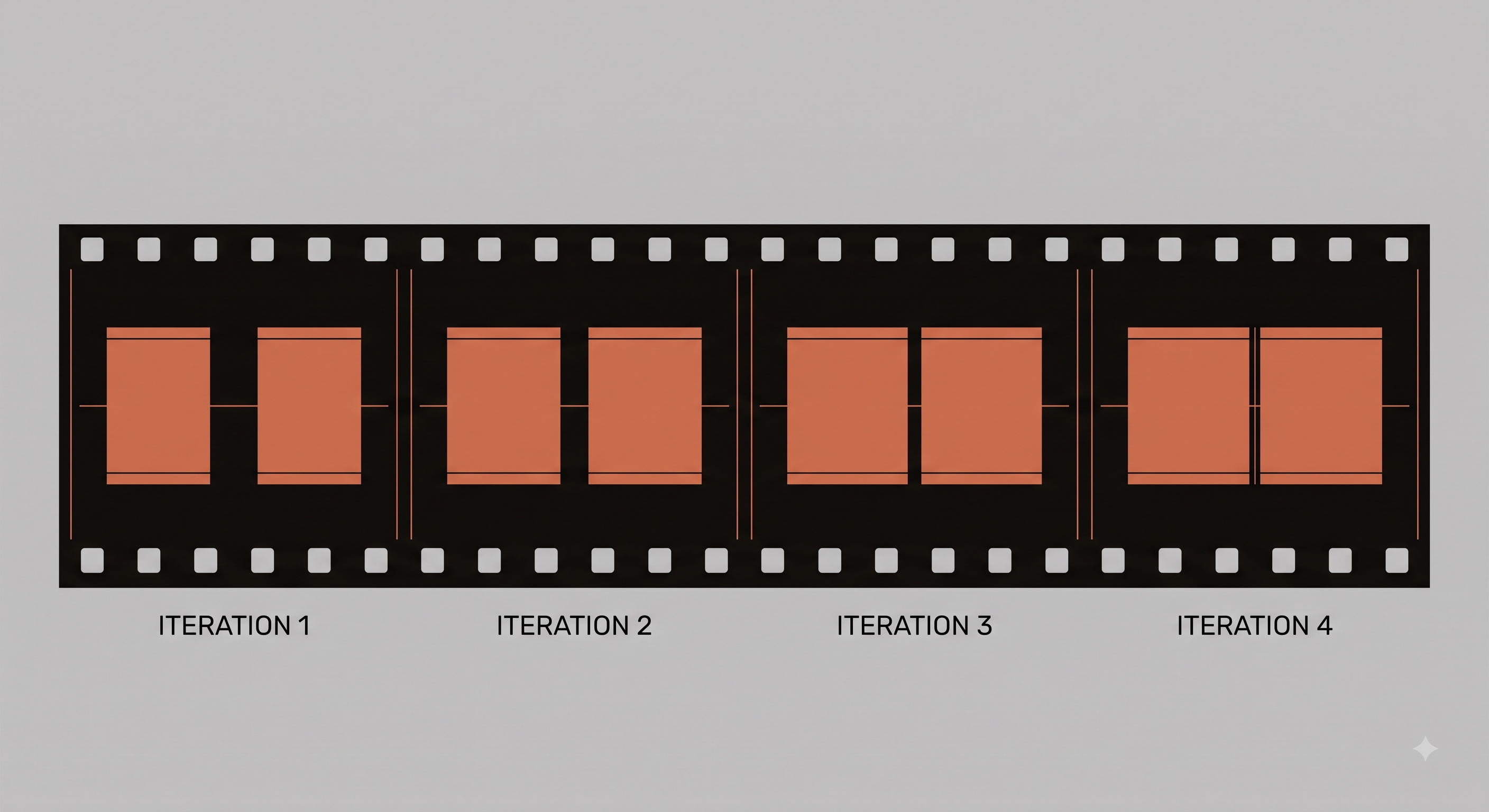
V3 targets the one number V2 could not move: omission at 55–62% of failures. Four iterations in, the best configuration reaches 52.3% — a new low, and still not below half. No V3 checkpoint beats the V2 release candidate on the comparable eval. This is an interim account of work in progress, not a result.
A schema registry, a deterministic pre-pass, and a distilled ~1B model routed by declared field ownership — beating both halves alone on every metric. 97 tests, a teacher-validation gate that rejects two in five labels before they can become training data, and every invariant enforced in code, not just in a docstring.
A personalized companion on gemma-4-E2B with a tiered, per-persona external memory: hybrid BM25 + dense retrieval fused by RRF, and LoRA SFT, DPO and on-policy distillation on top. On a 688-probe memory benchmark, abstention on unanswerable questions rose from 13.75% to 71.25% while accuracy stayed under 20%. 504 tests, a 112-entry claims registry, and 34 published errata.
 Model
Model